
Website Development with 12 Months Free Hosting

Website Development with 12 months FREE Hosting

Are you ready to take your online presence to the next level? At Focus Ecommerce and Marketing, we specialize in crafting bespoke websites on two of the most powerful platforms in the digital realm: Shopify and WordPress. Whether you’re an ambitious entrepreneur or a seasoned business owner, our expert team is here to turn your vision into a stunning reality.

Special Offer
WordPress

WordPress Development

Renowned for its versatility and customization options, WordPress is the go-to choice for building dynamic websites and blogs. With thousands of themes and plugins at your fingertips, you can create a truly unique online presence that reflects your brand’s personality and resonates with your audience. Plus, with its user-friendly content management system, managing your site has never been easier.

Shopify Development

As a leading ecommerce platform, Shopify offers unparalleled simplicity and scalability. From sleek storefronts to seamless checkout experiences, Shopify empowers businesses of all sizes to thrive in the competitive online marketplace. With its intuitive interface and robust features, you’ll have everything you need to showcase your products and drive sales.

Shopify-Development

Products Built for Profit

Fully Featured Platform with No Development

Website Development

Custom Design and Development:

Whether you're starting from scratch or looking to revamp your existing site, our talented designers and developers will create a visually stunning and highly functional website that sets you apart from the competition.
Ecommerce Integration

Ecommerce Integration

Ready to take your online store to new heights? We'll seamlessly integrate Shopify or WordPress with your ecommerce platform, ensuring a smooth shopping experience for your customers and maximizing your sales potential.

Responsive Design

Responsive Design:

In today's mobile-first world, it's essential to have a website that looks great on any device. Our responsive design approach ensures that your site is optimized for desktops, tablets, and smartphones, providing a seamless user experience across all platforms.
SEO Services

SEO Optimisation:

Stand out in the crowded digital landscape with our comprehensive SEO services. From keyword research to on-page optimization, we'll help you climb the search engine rankings and attract more organic traffic to your site.


Special Offer

special offer

Ready to elevate your online presence with a stunning website on Shopify or WordPress? Contact us today to schedule a consultation with one of our expert developers. Together, we’ll unlock the full potential of your online business and help you achieve your goals. Let’s build something amazing together!


Terms & Conditions

  • WordPress site must be hosted with Focus Ecommerce.
  • WordPress hosting applies to Focus Ecommerce Basic package.
  • Shopify hosting applies to Basic package.
  • Site cannot be moved to another provider within the initial 12months.
  • Additional costs my apply.
  • Focus Ecommerce reserves the right to withdraw the offer at any time.

Low Setup Fees

Low Cost of Ownership

Future Proof Platforms

Built for Profit

Success Stories:

From beginning to end, working with Focus Ecommerce was an absolute delight. Their team showed a profound comprehension of our vision and objectives, and they contributed a degree of creativity and knowledge above and above what we had anticipated
What impressed us most was the scalability and reliability. As our business grows, we're confident Focus Ecommerce can scale with us, ensuring maximum uptime and performance.
Have nothing but great things to say about Ivan. He has helped me take my business to the next level in terms of marketing, social media, expansion and growth. Honestly. I would still be poodling along if Ivan hadn't given me a well needed push. Strongly recommend

A Deep Dive into IRP Commerce

IRP Commerce

Unleashing Ecommerce Potential: A Deep Dive into IRP Commerce

A profit centred ecommerce platform with all the Products, Modules, App Store and Integrations for global success

IRP Commerce
IRP Commerce intergation

IRP Commerce

In today’s fast-paced digital landscape, the success of an ecommerce business hinges on its ability to adapt, innovate, and stay ahead of the curve. Enter IRP Cloud Commerce – a powerhouse in the realm of ecommerce solutions, revolutionizing the way businesses operate and thrive online. In this blog post, we’ll take a closer look at this ecommerce platform, exploring its features, benefits, and why it’s a game-changer for businesses worldwide.

The Power of IRP Commerce

At the heart of the IRP eCommerce platform lies a robust and versatile platform designed to meet the diverse needs of modern ecommerce businesses. From seamless storefront design and intuitive product management to powerful marketing tools and insightful analytics, profit centred ecommerce platform  offers a comprehensive suite of features to drive growth and maximize ROI.

The single % transaction fee structure is a stable and guaranteed structure that covers hosting, performance, platform enhancement and support leaving you to focus on trading

IRP

Products Built for Profit

Fully Featured Platform with No Development

AI

AI-Powered Personalization:

One of the standout features of is its advanced personalization capabilities. By harnessing the power of artificial intelligence, the platform delivers tailored shopping experiences that resonate with customers on a deeper level, increasing engagement, loyalty, and ultimately, conversions.

Multi Channel Commerce

Multi-Channel Integration:

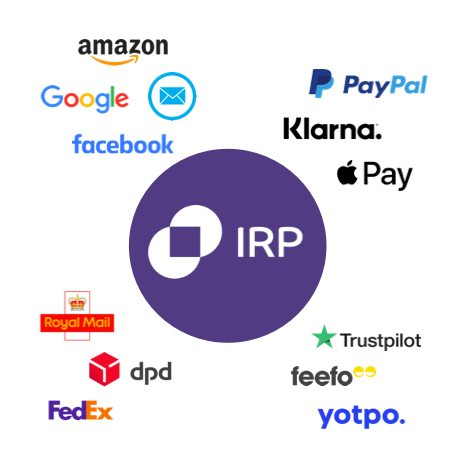
In today's omnichannel world, reaching customers wherever they are is crucial. The IRP Marketing Cloud enables seamless integration across multiple channels, including online marketplaces, social media platforms, and mobile apps, ensuring a cohesive and consistent brand experience across every touchpoint.

Data-Driven Insights:

With the IRP Trading Terminal, data isn't just information – it's actionable insights that drive informed decision-making. From detailed sales reports and customer analytics to predictive forecasting and trend analysis, the platform empowers businesses to stay ahead of the competition and capitalize on emerging opportunities.

Scalability

Scalability and Flexibility:

Scales effortlessly to meet your growing needs. With flexible customization options and robust infrastructure, the platform adapts to your business requirements, providing a solid foundation for long-term success.

IRP Commerce

Conclusion:

In conclusion, IRP Commerce isn’t just a platform – it’s a catalyst for ecommerce success. With its innovative features, powerful tools, and unwavering commitment to excellence, it is revolutionising the way businesses operate and succeed online. Whether you’re looking to increase sales, enhance customer engagement, or streamline operations, the IRP package is the ultimate partner for unleashing your ecommerce potential.

Low Setup Fees

IRP Commerce Cloud provides all the functionality you need out-of-the-box.

Low Total Cost of Ownership

Single % transaction fee structure is a stable and guaranteed structure.

A Future Proof Platform

IRP Cloud Commerce is the only platform built with a MERCHANT FIRST profit-based approach.

Built for Profit

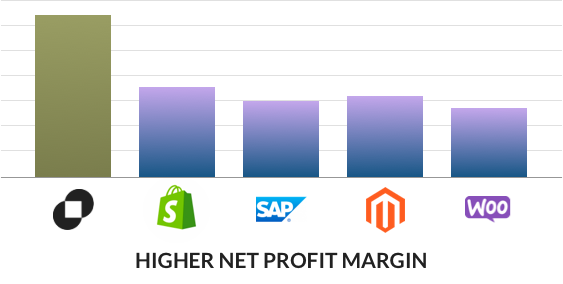
Maximise profits and help you outperform your competition

Success Stories:

The IRP has enabled Camping World to be a profitable multichannel retailer. Its systems and software has enabled us to grow the business and the efficiency of the service has enabled our sales team to give necessary information directly to customers
Choosing IRP platform for our ecommerce needs has been a game-changer. Their team's expertise and commitment to our success stood out from the start. What impressed us most was the scalability and reliability. As our business grows, we're confident IRP and Focus Ecommerce can scale with us, ensuring maximum uptime and performance.
I have worked with various companies over the years on website replatforming projects and the team at IRP have been the best team by far. Their attention to detail and open communication throughout the project ensured we hit our go-live targets. It is fantastic to have the new website live and trading
Irp Commerce and Focus Ecommerce

Ready to take your ecommerce business to new heights?

Explore the possibilities with IRP Commerce and Focus Ecommerce and embark on a journey of growth and success like never before.

What is a Full Service Ecommerce Agency?

Blog / Ecommerce / Outsourcing your ecommerce

Ecommerce guide

Outsourcing Your Ecommerce: Full-Service Agency vs Specialists vs In-House

What a full-service ecommerce agency actually does, how it compares with hiring several specialists or building your own team, and how to decide which is right for your shop.

Ivan Latter, Owner, Focus Ecommerce  ·  Updated 21/10/2026  ·  8 min read

Key takeaways

  • A full-service ecommerce agency builds, runs and grows your online shop under one roof.
  • It suits growing shops that don’t want to manage several suppliers or hire a full team.
  • Specialists can go deeper in one area. In-house gives control but costs more to set up.
  • Ask any agency to show who would actually do the work, and how they report results.

What is a full-service ecommerce agency?

A full-service ecommerce agency is one team that handles every part of running an online shop: building and maintaining the website, the day-to-day operations behind it, and the marketing that brings in customers. Instead of hiring a web developer, a marketing agency and an operations manager separately, you work with one partner.

Plenty of agencies call themselves full service but only cover one or two of these areas. Many specialise in development, or in paid ads, or in content. So it’s worth checking exactly what’s included before you sign.

What does a full-service ecommerce agency do?

The work usually falls into three areas.

Build

  • Website design and development
  • Platform choice and setup
  • UX and conversion
  • Speed and performance
  • Tracking and analytics

Run

  • Order management
  • Stock control
  • Customer service
  • Back office processes
  • Reporting

Grow

  • SEO
  • Google Ads
  • Email marketing
  • Social media
  • PR and partnerships

Looking for a full-service ecommerce agency?

See how Focus Ecommerce builds, runs and grows online shops.

Full-service agency vs specialists vs in-house

There are three main ways to get your ecommerce work done. Here’s how they compare.

Full-service agencySeveral specialistsIn-house team
Who you manageOne partnerSeveral suppliersYour own staff
Joined-up strategyBuilt inUp to you to coordinateGood, if the team is complete
Range of skillsBroadDeep in each areaLimited to who you hire
Speed to startWeeksWeeks per supplierMonths to recruit
Fixed costsOne monthly feeSeveral feesSalaries, tools, training
Best forGrowing shops without a full teamShops with one clear gapLarger brands with budget

Pros and cons of a full-service agency

Pros

Cons

It’s usually a good fit if most of these sound familiar:

If you already have a strong in-house team and only need help with one thing, such as Google Ads, a specialist may suit you better.

How much does a full-service ecommerce agency cost?

Most charge a monthly fee based on how much they handle. At Focus Ecommerce, full-service ecommerce management starts from £695 a month. What affects the price:

  • The size of your product range
  • Which services you need (build, run, grow, or all three)
  • Your ad spend and number of sales channels
  • Whether you need a new website first

5 questions to ask before you hire

  1. Which services do you do yourselves, and which do you outsource?
  2. Who will actually work on my account?
  3. Can you show results for a shop like mine?
  4. How do you report, and how often?
  5. What’s the notice period if it isn’t working?

FAQs

Many ecommerce agencies focus on one area, usually building websites. A full-service agency also runs the shop day to day and handles the marketing.

Yes. Many businesses keep some work in-house and hand the rest to an agency.

Often, for smaller and growing shops, because you share a team’s skills rather than paying several full-time salaries.

Ivan Latter
Owner at Focus Ecommerce. A lifetime in retail and running ecommerce store

Not sure which option suits you?

Book a free 30-minute call and we’ll give you an honest view, even if the answer isn’t us.

Want one team to run your online shop?

See how our full-service ecommerce agency builds, runs and grows shops like yours.

Related reading

Creating a Content Strategy for your Ecommerce Store

Creating a Content Strategy for your Ecommerce Store

Content marketing, clearly described, is the process of producing original, high-quality content targeted at a specific audience, attracting their interests and addressing their points of pain. Creating a content strategy means instead of making a hard sell, by offering useful information that earns goodwill and interaction, it usually promotes a brand, service, or product.

Creating a Content Strategy| Focus Ecommerce and Marketing

The primary objective of this initiative is to convert consumers to buyers, directing them through the process of meeting their needs in the sales funnel, to prove yourself to be a credible source of knowledge, to position yourself as the best placed authority to assist them, and then to convert interest to paid business and a valuable ongoing connection.

The advantages of a well-executed eCommerce content strategy include:


  • It drives new traffic to your website.
  • This promotes confidence in your brand.
  • With the all-important conversions, it can help.
  • It can create a separate revenue source.
  • It can provide enduring value with its evergreen material.


1: Identify Your Target Consumer

When your creating a content strategy you need to know who your buyer is in order to create e-commerce website content targeted to consumer needs. You can create content targeted at them by creating a character or fictionalized image of a customer or buyers based on real data and

marketing insights, refining it depending on what part of the sales funnel you position it and which part of the purchaser’s journey you are targeting.

For instance, without any sales message, you will provide content customized to their needs at the top of the sales funnel. Further down the funnel, once you’ve won their confidence, you might start providing potential solutions to customer problems and have a more tailored sales pitch to convert them to paying business.

The things you will want to know for your buyer persona include:

  • Demographics: Gender, age, location, or other concrete identifying information.
  • Personality: Whether they are lazy, super productive, sceptical, optimistic, or have other traits, the personality profile will help determine their shopping behaviour.
  • Motivation: Are they learning more about your goods and industry on your e-commerce site? Are they ready to buy, or are they just shopping for windows? Understanding customer motivation allows you to customize content accordingly.
  • Pain points: What do your customers find frustrating? If you understand this, you can provide a solution to their issues.
  • Preferred content channels: Knowing your customers’ preferred sites, social media channels, and apps can tell you how best to reach them.

2: How Does Your Audience Consumes Content

You should find out how your audience wants to consume content to target them the same way for your e-commerce website content by looking at your internal data or researching market trends.

Some questions you’ll want to answer include:

  • What’s the most popular social media channel for my target audience?
  • Is there a specific type of content they prefer, Images, video, long form content?
  • Does my target audience prefer to make purchases via a mobile or desktop?
  • What length of time is my target audience willing to spend reviewing content?
  • Use your Google Analytics to track how people are coming to your site

3: Research and Create Your Content

For creating a content strategy you need to do some research at the front end to build an efficient content strategy for e-commerce. For instance,

  • Brainstorm: Work with a small group of people invested in the process, with strong contributions.
  • Competitive SEO Evaluation, Looking at how rivals’ domain names work in search rankings and keyword gaps, to find out what choices are available to create content against fresh search words.
  • Understanding the content being produced by other brands: Use a tool like Google Alerts to keep notified about brand mentions online, keeps you up to date of trending content.
  • Think outside the box if an idea seems stale because it been done many times, try flipping it on its head to come up with a new perspective.

4: Publish Content Based on your Buyer’s Journey

The sales or marketing funnel is divided into three parts a top, middle, and bottom that corresponds to various parts of the purchaser’s path.

The top of the funnel is the process of customer exploration or understanding, where you prove that you know their points of pain. Your content is easily found and consumed at this stage.

The content offers solutions to issues without any particular sale of your product or service, whether by blogging, social media marketing, search engine marketing, or any other medium.


The middle section of the Sales & Marketing funnel is the step of evaluation, where you engage with your prospective clients more profoundly, building confidence. You have proven that you know their points of discomfort, and now you can start pointing to solutions that will assist them. Where you tried to educate customers before, you are now leading them to the right responses.

Here, the items you offer might include comparison guides, case studies, and even free samples. Consumers usually do extensive research on the subject at this point, including whether your approach is the right match for them.


The bottom of the sales funnel is the purchase stage, where people put their money where their interest is. Here is where you prove that your outstanding value is just too much to be passed by. At this purchase stage, you might use live chat, a chatbot, or emails to customers at the point of buying or retargeting/remarketing to keep your message in front of someone at the tipping point.


The Decision stage, where people put their money where their interest is. Here is where you prove that your offer is just too good to miss out on. At this decision stage, at the point of purchase or retargeting/remarketing, you might use live chat, a chatbot, or emails to customers to hold your message in front of someone at the tipping point.


5: Measure the Results

Since creating a content ctrategy on ecommerce websites is typically an ongoing operation, and not a one-off thing, you need to look at the results from past attempts to enhance those that are going forward.


Good metrics will inform you what sort of investment return (ROI) you have accomplished. Progress may be evaluated by such factors as:

Organic traffic, Leads, Conversion rate, Time on page, Social shares, Engagement, ROI, Backlinks


Bear in mind that the specific metrics you want to measure will vary depending on the content type. Some forms of content and the metrics on which you would want to base performance include:

  • Blog posts/articles: Key performance indicators (KPIs) range from website traffic and unique visitors to page views per visit and geographic trends.

  • Email: Indicators include open rate, conversion rate, and click-through rate.

  • Social media: Followers/fans, Likes, and post reach are among the KPIs.

  • Videos: These include unique viewers, shares, and average view duration.

  • Podcasts: Downloads, subscribers, and shares are included here.

  • Pay-per-click (PPC) campaigns: The many KPIs range from cost per click and click-through rates to cost per sale and impressions.

At Focus Ecommerce & Marketing we have the tools to help you measure the performance of your content activity. We can analyse various pieces of content and tailor that content to meet your specific needs.


6: Ask for Customer Feedback

Listening to what your clients have to say is a huge part of enhancing the content you deliver and making sales. Knowing what your customer feels about your sales process is vital for potential progress, whether you send a follow-up note, review live chat recordings, perform customer interviews, evaluate documented sales calls, track social media networks, or employ other means.

Some ways customer feedback can help your ecommerce content strategy include:


  • Ensure you have an effective customer support service: Customer feedback is one way to help gauge whether you have a sustainable customer support system, which ultimately can help keep sales coming in.

  • Qualitative feedback about content: Although we have suggested ways to get data, qualitative feedback is also very valuable. Through customer surveys, you can figure out whether your content is helpful to your customers. The more helpful your content, the more likely you will find more people who want to use your product or service.

  • Potential to use feedback as promotional content: Arguably, the biggest benefit to customer feedback is the possibility of using it to persuade new customers. Testimonials are a great way to add value to your brand and hopefully increase your bottom line.


What Are Some Types of Effective Ecommerce Content Marketing?

When developing an ecommerce content strategy, there a variety of content types at your disposal. Focus Ecommerce & Marketing can assist you with any of the following:

 
  • Blogging: Blog posts are fundamental to the majority of content marketing strategies, building customer relationships, delivering leads, and lending themselves to search engine optimization (SEO) practices.

  • Original photography: In this digital age people are unable to touch what your goods, using photography helps to make up for this fact. Create a set of images for each product, tagging them correctly will help search engines understand what you are offering. Create lifestyle shots so people can imagine wearing or using the item.

  • Video content: Videos create an immersive experience and are proven to drive up the number and size of sales. Social media channels recommend the use of video as a way of increasing engagement.

  • Product guides: These can attract more traffic to your ecommerce website as people look for more information about products and services.

  • Customer stories: Customer testimonials, reviews, case studies and user generated content.

  • Email marketing: Even just confirming orders, notifying buyers about shipping and package delivery, and doing a follow-up gives you multiple chances to communicate with customers and build relationships.


The most effective ecommerce strategy combines all of these elements. All brands, large and small need to invest in content marketing because it is crucial to attracting new business and staying competitive.

We can provide a comprehensive, all-in-one solution to boost your online selling presence, whether it’s to get more traffic with organic and paid searches or create unique content that meets marketing and sales goals.